
Review of A Hundred Doors by Michael Longley
By: Michael A. Arnold

Icy blasts were coming off the North Sea. Torrents of white foam were storming over the harbor walls in a pattern. The town felt empty as we slipped into a little pub. Inside, ship ribbing and black and white sailing photos from days long gone hung on the walls as we went over to the fireplace, lit and warm before two green leather armchairs. In those armchairs we felt mature. We were twenty-somethings but felt like hardened sailors finally reaching land again. It was good.
When we ordered drinks, one beer and one coke, my friend said "You know, Mike, places like this remind me of a poem I read once."
"Oh yeah? Who by?"
"Ever read Michael Longley?"
I must admit, I had not. Later, before he dropped me off home we stopped by his house – bringing out a copy of A Hundred Doors and throwing it onto my lap with a "here, check this out". It was a good thing he remembered. It started to rain that night, so I sat beside an open window and started reading it.
That collection is one of the best books of poetry by a modern poet I have read, and it deserves to be more widely known.
A poets' work is often provincial at heart. This seems to be the case anyway. We might not realize it, but our imagination is often molded by the first landscape we call home. This does not necessarily mean the landscape we grew up in, but everywhere we know well will have an influence on our outlook, the way we think. Not all poetry needs to be a profound exploration of the grand themes, or some deep journey through a series of complex thoughts. Some poetry can be purely personal, and just talking about the poet's own life. In A Hundred Doors, Longley makes poetry from his personal life and his landscape that, when carefully read, become more complex, but with Longley there is still the surface that can be enjoyed for its own sake too. He has an immense skill with words which makes him great fun to read.
Michael Longley is an Irish poet, born in Belfast in 1939 and educated in Classics at Trinity College Dublin. The influence of classical authors can be seen in his work, especially the influence of Horace and Catullus and their attitude to writing poetry. Horace should probably be closer in mind than Catullus, but like both Longley's poetry writes short lyric poetry with the occasional philosophical musing, but this is always done in a distinctly unpretentious way. You are never going to feel dumb reading Longley's work, instead it feels like the voice of someone with a lot on his mind, and they respect your intelligence enough to phrase it in a good, informal way.
But there are important themes in this collection, and each time you read this book you see them come up more and more, and in different ways. War is a prominent subject, but it is always distant, while death is much more present; but family is the central theme. Longley is now an old man and a grandfather, and this comes out in some really touching ways, and all of this poetry is set against the region of Carrigskeewaun, Ireland, where Longley was living at the time.
This landscape of Carrigskeewaun is given to us straight away, in the first poem 'Call'. This poem is set on New Year's day, at the dawning of the millennium, with Longley thinking about his friend sitting alone by his cottage 'heath' – a word with a more old-fashioned and rustic feel than might be expected from modern poetry. The tone of this poem is slow, peaceful, but there is also a sense of melancholy, setting the mood of the book. This is the melancholia of old age.
Some of the poetry here has a use of language so natural and yet so skillfully constructed it is clear a lot of hard work has gone into every word. That is true of even the shorter, almost throw-away feeling poems like 'Horseshoe':
This poem, seemingly from the point of view of a worker, intimately connected with the landscape ("I am the farrier (horseshoe maker) in this townland"). With 'farrier' sounding like 'carrier', there is the almost-suggestion that the poet is in a sense the worker, or even the creator of the poem's landscape. Or rather, through poetry the poet is working the land the way the horse worked the land in days gone by. There is also something vaguely Anglo-Saxon here too, with the use of 'sound-glints' and 'God sparks' especially, as if suggesting the ancient traditions, the poet is self-consciously working in.
In a following poem 'The Leveret' he addresses somebody, the reader, with the second person 'you' as Longley shows 'you' around Carrigskeewaun. This poem seems to have an echo of and uses the same form and meter as Catullus' poem 2.
The landscape is a home being crafted and molded with words. Even though Longley starts the poem 'The Wren' with the line 'I am writing too much about Carrigskeewaun', and the name itself is not used for the rest of the collection (until the very last poem) he is still in that landscape. The last poem is when he leaves Carrigskeewaun, and even though he tried to not mention it again he has failed, and this intentional failure is an admission: that we never really leave our own world. Our homes, our families, and our landscapes birth and form our mental landscapes. This theme is further developed in a following poem 'January', where Longley makes Carrigskeewaun an extension of himself, which echoes the earlier 'Horseshoe':
Basically, we become a part of our landscape as much as our landscape becomes a part of us.
But melancholia is never far away, as with the poem 'At Dawn':
This poem is interesting, and we have to wonder what the 'grandfatherly nightmare' was, which seems to be hinted at in the poem 'The Sixth Swan' later on:
This poem contextualizes the earlier one but it also opens more questions. Questions that perhaps do not have immediate answers, and so there is a sense of worry – as will happen when family members are thought of but not there with you. Is Maisie alright? Is she happy? Doing well at school or work? Things a grandfather who loves his grandchildren will be thinking about.
Death is a theme that is explored in a number of ways, from poems about his own grandfather in the poems 'Gunner Longley', 'Volunteer', 'Trench Foot' and 'Bumf', and 'A Hundred Doors', the namesake of the book, which interestingly begins:
Where he compares the snuffing out of candles to lives once lived. Being an old man, and a grandfather, it is only natural for Longley to have death on his mind. In old age, our long-held and good friends are either dead or in their winter years too, and the mysteries of death (if there really is a life after death, if there really is a God, what will happen once we die) will be preoccupations. This is not only dealt with abstractly either, one of Longley's friends has died, and tribute is paid to him in the poem 'The Lifeboat' (this is the poem my friend was talking about):
I have just helped him to sold his crossword puzzle
There is a sense of great loss with Charlie Gaffney's death, not just in the death itself – the changing of his world as the old pub he liked, and owned by a friend, is going to go, but also a loss of confidence too. In asking Charlie's ghost the kinds of mundane questions like those in the third stanza, Longley is saying that something else goes with Charlie to the grave. It is a kind of security that has been lost, death is not just terminal for the dead, it is deeply hurtful loss for the living as well. There is also something sad in the 'sentimental atheist' asking these questions, because now he will never get the answers to them. When a friend dies there are always going to be these feelings, opportunities for conversations that are now gone forever.
As the book comes to a conclusion the feel starts to shift, and Longley reflects more and more on both his grandfather who fought during WW1, and his school days. His schooldays are reflected in the many classical allusions and references that litter the later parts of this book, such as the poems 'Helen' and 'Cygnus', two characters mentioned in Homer's Illiad, which is itself mentioned in the poem 'Old Soldiers' where soldiers in No Man's Land are reimagined as famous Greeks from across the classical Greek timeline.
In these last poems, timelines and figures start to fuse together in Longley's imagination, but there is no grand realization or ultimate epiphany. The questions, worries, doubts, and fears Longley is talking about are unsolvable. Meaning that the final poem 'Greenshank' when he leaves 'Carrigskeewaun for the last time, I hope you discover something I've overlooked' is both a message to the reader that there is something that could be found in this collection, and also that it is a kind of death for the poet itself – since it is the end of the collection. The voice of A Hundred Doors will not return, even if (this book was published in 2011) Longley has written more poetry since then. The Michael Longley of Carrigskeewaun has died even if the actual man himself has moved on, which is a kind of death. And what that means is probably as unanswerable as it is subjective to our own experiences through life.
It would be wrong to think of some poets' collections as simply random poems that have been compiled. With some poets collections become like a concept album, and each poem has been selected and placed to reinforce and complicate themes, or developing ideas. Michael Longley is one of those poets, and A Hundred Doors is one of those collections. He is a poet to be read carefully, and read carefully a number of times, because with each rereading you see more depth – and appreciate his work further. His love of language is as rich as his love for his family, and so he would worry about them when his own time comes – something we will all face one day.
This is a fantastic collection from a seasoned poet working to all his strengths and is one to recommend to anyone interested in poetry. Even when a poem is not quite understood, there is a sense that something has been said – if not complexly (or profoundly, which is not always the case, nor should it be) it has been said well. Even though the focus is on Carrigskeewaun and that Irish landscape, Longley's imagination is roaming around different places and histories: from the Homeric world of ancient heroes to the battlefields of Europe in the last century, everything is returning home, and to family. Since the things that Longley questions in this book are so universal and mysterious, this book would even be one to keep and reread every now and then. Each time you can find a deeper relevance to yourself, or just a friendly voice to help you through the darkness. 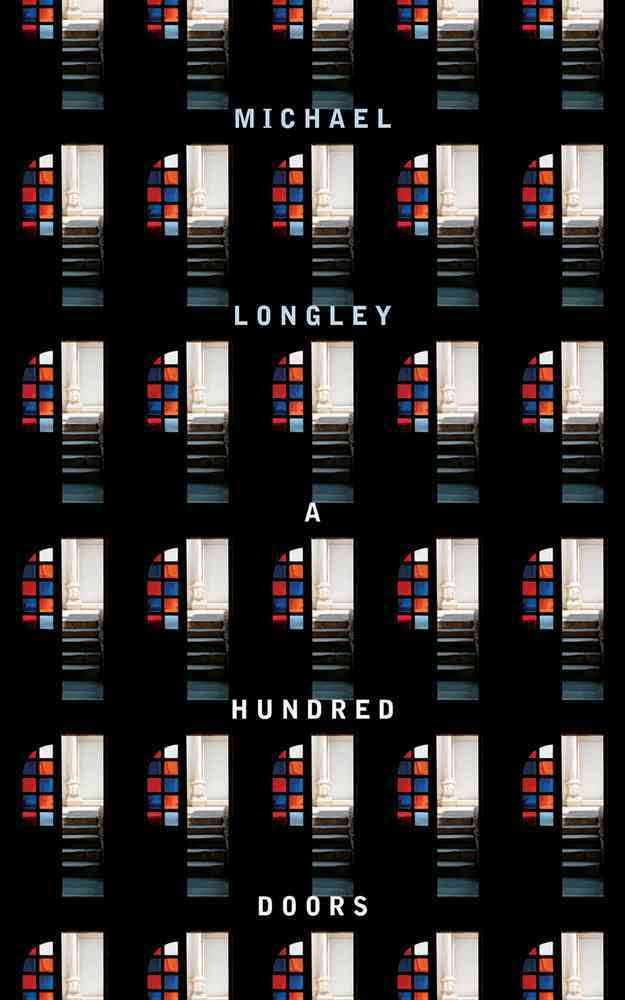
I found a rusty horseshoe where skylarks
Rise from the sheepshitty path, God sparks,
Sound-glints for the bridle and bridle hand.
I am the farrier in this townland.This townland is growing old too.
It makes sense to be here in the cold:
Fuchsia's flowerless carmine, willow's
Purple besom. We are the lovers still.
Mistiness and half a moon provide
Our soul-arena, a tawny ring.Wakened from a grandfatherly nightmare
I sleepwalked around the cottage at dawn,
Checking windows and wind-rattled gates.
The westerly blew me wren-song, then
Wing-music. Five swans creaking towards
Corragaun Lake would have been enough.
I have to imagine the sixth swan
That was definitely there at the zenith.You are the sixth swan, Maisie:
The other five have flown
To the vanishing lake
And wait beyond the ridge
For you: but stay a while
In my mind, dawn-memory,
Little zenith-lingerer. God! I'm lighting candles again, still
the sentimental atheist …I have imagined an ideal death in Charlie Gaffney's
Pub in Louisburgh: he pulls me the pluperfect pint
As I, at the end of the bar next the charity boxes,
Expire on my stool, head in hand, without a murmur.
And we commune with ancestral photos in the alcove
He doesn't notice that I am dead until closing time
And he sweeps around my feet.
But it's Charlie Gaffney
Who has died, Charlie, how do I buy a fishing license?
Shall I let the dog out? Would the fire take another sod?
The pub might as well be empty forever now. I launch
The toy lifeboat at my elbow with the old penny.