Review of the Leaning Tower of Pisa
By: Michael A. Arnold

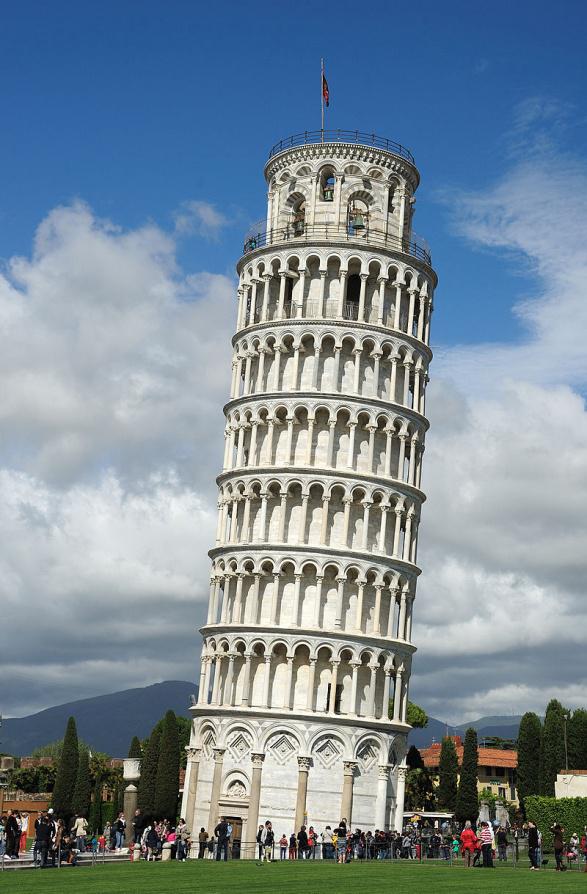
After going through random shops, we crossed the Arno River: into the old part of Pisa. It was a cool day, with the ghost of last night's rain hanging over the city, but the medieval streets were alive with Italian energy. We could have got lost among the tiny squares and narrow alleyways (with some beautiful overhanging summer flowers) but one of us had some data left on their phone, and we found the Via Roma taking us straight to the cathedral. That's when we saw it, climbing over the other buildings like a mountain in the background. A giant leaning tower.
It is actually a bit strange to remember: like something from a half forgotten dream. Walking up to it, you could see it slant in such an unnatural way. There's a sense that something is very wrong, like it is frozen mid collapse, and if someone had paused that one part of the world. It does not honestly look real somehow, and as you get closer that impression only becomes more intense. But, somehow, it remains standing. That tension means it something you cannot look away from, and you think (I thought) as soon as you turned your eyes away it would topple over, like it seems to want to do.
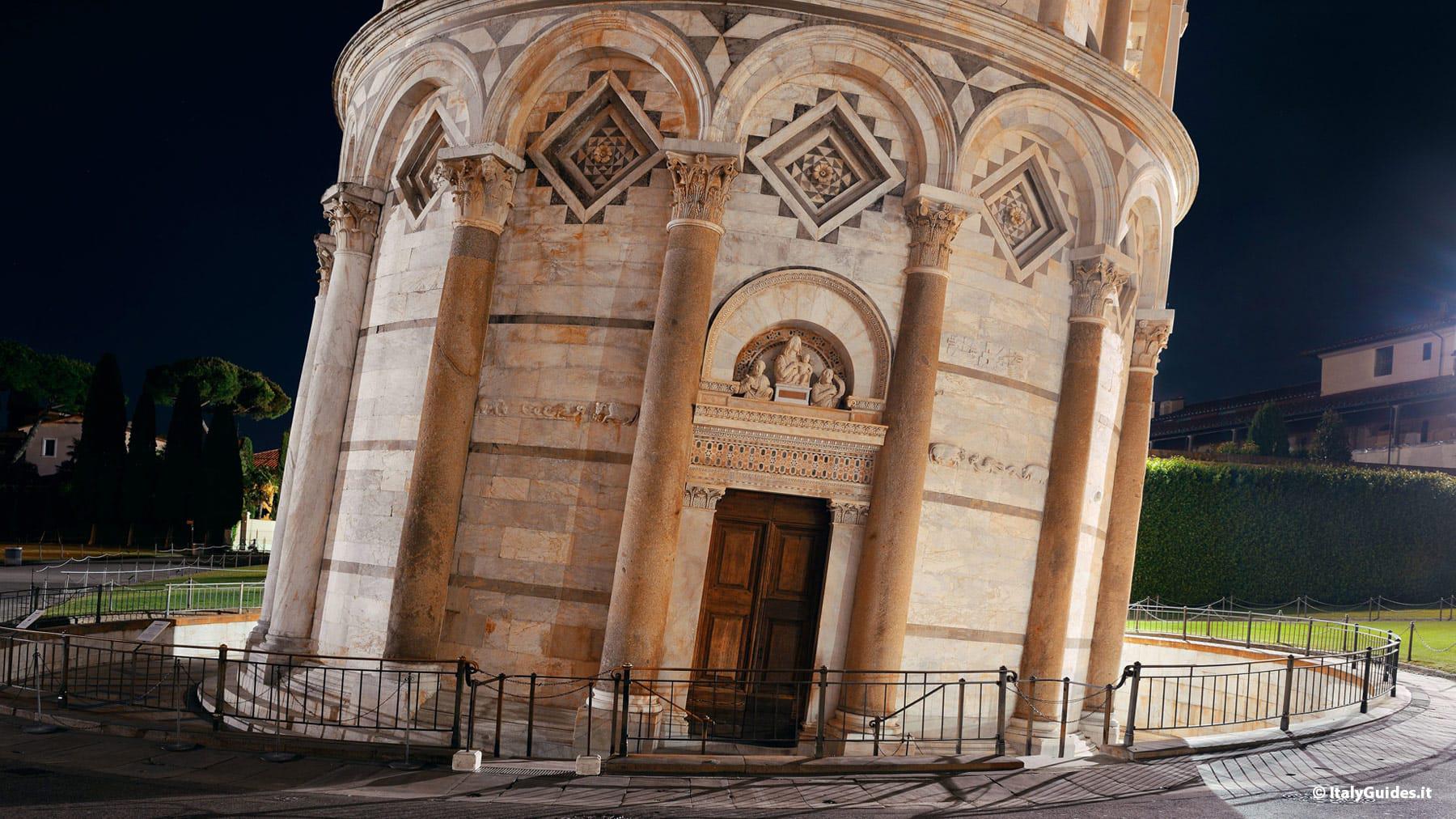
It is so attention-grabbing, it is difficult to actually see the artistry on the tower itself. To be honest, I wonder how many people have been close enough to touch it but have not even noticed the intricate stonework. There are probably too many details in the tower's masonry that have been overlooked simply because the structural oddly, and it is a genuine shame. For an example, the busts just above the entrance are set into an archway of such fine, even arabesque patterning that we should think about how many hundreds of hours it must have took to carve them from solid stone. The tower itself is in the far side of the piazza del duomo, beside the central cathedral of Pisa. This cathedral, built in 1118, is beautiful in its own right, and well worth walking around - looking the cavernous, medieval inside, but its appeal is in a way dwarfed by the tower that was originally only supposed to be its belltower. When the belltower was started in 1173 the builders noticed that (for some reason) the entire thing started to lean to one side. This must have seemed like a disaster at the time, but eventually the city decided to finish it. It was finished in 1372. The fact that it was still finished with so much care and attention to detail is a testament to Pisa's trust in their skill and their dedication to beauty - even when everything must have felt like it had gone horribly wrong. Bells were added shortly after the construction was completed, and for a long time after it called believers to mass.
What causes the tower to lean like this? It is because it was built on unstable clay-like subsoil, which had only been noticed when work was started on the second floor. Construction was actually halted because Pisa was focusing so much on its wars with neighboring cities, and it took another hundred years, or slightly more than that, for the work to be completed. A strange fact is that, because it has stood on that spot for around 650 years, the tower is very slowly self-righting. But because it is now so emblematic of Pisa, and of Italy itself, there have been many efforts over the years to keep it at its current angle.
That afternoon we had a meal under the shadow of the tower, making jokes about how we could order a leaning tower of pizzas. I remember that as the sun was falling behind the buildings, and the cool air of night started blowing through the streets, I'd look up and try to pay more attention to the design and artisty that went into it. The building is still a beautiful example of art. The intricate colomns that ring the outside of the upper stories, and all the little details of it are clearly visible, and they really are worth paying more attention to.
But that is not what stayed with me, I do not know why. What stayed with me was the fact that it was still standing, with that famous lean, all these hundreds of years later – always looking like it is just about to fall but never does. And I thought about how it was completed despite that lean – making it very literally art from adversity, or more accurately despite it. Even when everything seems to be going wrong, something beautiful can still be made. I think that's something everyone should see in the tower. Even when other people might have given up, the people of Pisa did not.