
Review of Art Review Golden Mouse
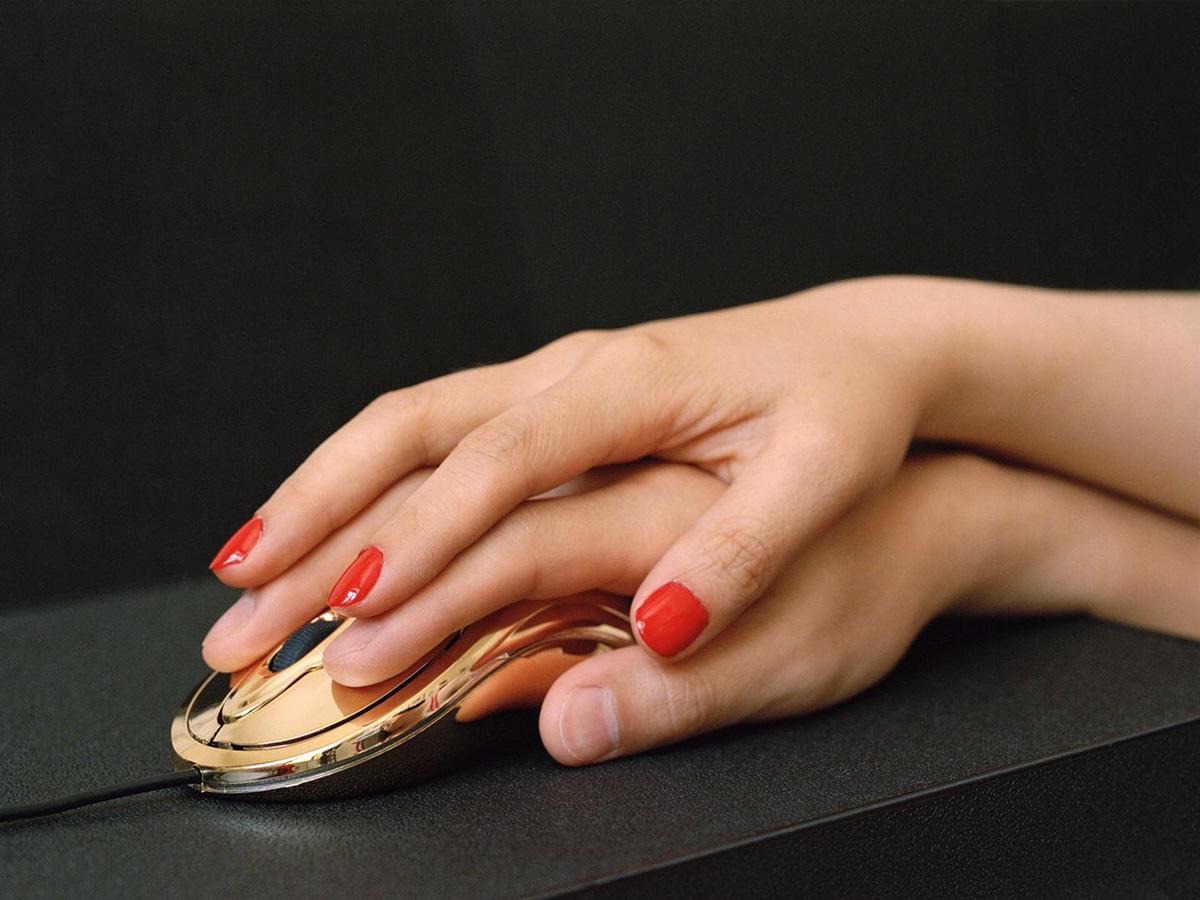
Pixy Liao, Golden Mouse, 2014. Photograph © Pixy Liao. Image source: Photoworks.
Art Review: Golden Mouse (2014) by Pixy Liao
By Michael Liang Wei
Golden Mouse gives you a first impression of closeness. Two hands rest over a gold-colored computer mouse on a dark surface. The upper hand has red nail polish. The lower hand touches the mouse directly. Pixy Liao removes the faces, the computer screen, and most of the surrounding room. What remains looks familiar, but slightly awkward. A device designed for one person now has two people trying to use it. The gesture can suggest help, affection, or control.
Formal and technical observations
Liao builds the photograph around a small arrangement of hands and an ordinary object. Several choices give that arrangement its force:
• The dark background keeps your attention on the skin, red nails, and reflective mouse.
• The overlapping hands create a clear order, with one hand above the other and the mouse beneath them.
• The red polish makes the upper hand easy to follow across the image.
• The gold-colored surface gives the computer accessory the appearance of a luxury object.
• The close framing removes facial expressions, so the meaning rests on touch and position.
• The cable leads out of the frame, connecting the gesture to a computer you cannot see.
The photograph gains much of its effect from differences in texture. The skin looks warm and soft. The mouse is smooth, shiny, and hard. Light catches its curved surface and the red polish, while the background stays quiet. M+ identifies its example of the work as an inkjet print. The image itself depends on careful framing and placement. You can read its basic arrangement immediately, but deciding what that arrangement means takes longer.
Interpretive reading
The photograph belongs to Liao's ongoing series Experimental Relationship, which she began in 2007. The project examines her relationship with her Japanese partner and collaborator, Moro, who is five years younger than she is. Liao has explained that growing up in China led her to expect a partner who would be older and act as a protector or mentor. Her relationship with Moro gave her a reason to question that expectation.
Golden Mouse makes that question physical. Her hand rests over his, placing the woman above the man within the composition. On her website, Liao describes the image as "Two hands controlling one mouse. I'm on top of you, you are on top of it." The sentence has the same dry humor as the photograph. An ordinary computer accessory becomes a way of showing how authority can pass through another person.
Still, the touch leaves room for tenderness. The upper hand follows the shape of the lower one. It covers without visibly gripping. That makes the photograph feel different from a simple image of force. The pose could resemble someone teaching a partner how to use a computer, or finding an excuse to stay close. These possibilities complicate the idea of control. Guidance and affection can occupy the same gesture.
The missing screen matters. You cannot see what either person wants to click, select, or change. Their purpose stays outside the photograph. Your attention turns toward the relationship between their hands. One person may guide the movement, but the other still touches the device. The arrangement makes authority visible while leaving the actual decision unresolved.
The gold finish adds another layer. It makes a practical object look precious, almost like a piece of jewelry beneath their fingers. That appearance may suggest the value people place on having control. It also gives the scene a small absurdity. The object looks important, yet the difficulty remains ordinary: two people have to agree on how to move it.
Strengths and limits
Strengths:
• A clear composition that gives an everyday gesture emotional weight.
• Effective use of red nails and reflected light to direct attention.
• A simple physical arrangement that opens questions about gender and authority.
• Humor that allows the image to feel intimate without becoming sentimental.
• An unresolved relationship between giving guidance and taking control.
Limits:
• The relationship between Liao and Moro needs outside context to become specific.
• The lack of faces limits what you can read about either person's feelings.
• The image can appear to offer a single visual joke if you stop at the stacked hands.
• The staged pose cannot tell you how the couple shares power in daily life.
These limits matter because it would be easy to treat the photograph as proof of who controls the relationship. A composed image cannot settle that question. Its value comes from making you examine the gesture and the assumptions you bring to it.
Final thoughts
Golden Mouse holds your attention through a small uncertainty. The hands appear comfortable together, but their positions also establish a hierarchy. The red nails draw the eye toward the person on top. The hand underneath remains in contact with the mouse. Each detail makes the arrangement easy to see without making it easy to explain.
I find myself returning to the space Liao leaves outside the frame. Without the screen or their faces, I have to judge the gesture on its own. My reading shifts between affection and interference. That shift is the strongest part of the photograph. It catches how a familiar touch can mean different things to the person offering it, the person receiving it, and someone watching.
Liao makes a small scene carry a difficult question about living together. How much direction can one person give before help becomes control? Golden Mouse keeps that question close to the body, where it feels less theoretical and harder to dismiss.
Let The Contributor Know What You Think!