

The essay that gives the collection its title, Imaginary Homelands, first appeared in the London Review of Books on 7 October 1982 (Rushdie). In it, Salman Rushdie compares Midnight's Children to other works shaped by diaspora and argues that the migrant holds a central place in modern history. Whether moving between nations, languages, cultures, or from rural communities to urban centers, the migrant, Rushdie suggests, is perhaps the defining figure of the twentieth century.
Among the notable pieces in Imaginary Homelands is "Commonwealth Literature Does Not Exist," an essay inspired by an encounter Rushdie had at an English Studies seminar in Cambridge in 1983 (Genotiva 114). During the event, a British Council representative told him that, for the seminar, "English Studies" would include "Commonwealth Literature". This remark prompted Rushdie to reflect on the usual separation between the two categories, which he humorously compared to incompatible entities rarely allowed to coexist. His reflections were reinforced by a later conversation with an English literature scholar who suggested that writers from former colonies occupied a marginal, peripheral position relative to the literary center (Genotiva 114).
Rushdie's concerns regarding the label "Commonwealth Literature" were further highlighted when a British magazine published interviews with him, Shiva Naipaul, and Buchi Emecheta (Genotiva). All three writers expressed dissatisfaction with the term, viewing it as inadequate and even objectionable. The magazine underscored this sentiment by publishing the interviews under the headline, "Commonwealth writer … but don't call them that!"
Drawing from Rushdie's observations, one may ask whether a similar dynamic exists in other literary contexts (Genotiva). If the phrase "English literature" were replaced with "national literature," Rushdie's ironic account might resonate with debates closer to home. Such a comparison raises important questions about the meanings and implications of categories such as "regional literature" and "national literature". These issues invite further discussion regarding how literary traditions are classified, valued, and positioned within broader cultural frameworks (Genotiva).
Based on the arguments Rushdie advances in Imaginary Homelands, he would likely be skeptical of any literary classification that establishes a hierarchy between a privileged center (such as national literature) and a marginalized periphery (such as regional literature). Rushdie's critique of the term "Commonwealth Literature" (by extension, regional literature) extended beyond mere terminology. He argued that the label positioned writers from former colonies (or other region) within a separate and subordinate category in relation to English literature (or national literature). For Rushdie, the problem lay in the unequal relationship implied by such classifications: one category was treated as the standard or norm, while the other functioned as a secondary supplement.
He would probably argue that literary value does not depend on proximity to a political or cultural center. Just as Indian, Nigerian, or Caribbean writers should not be treated as peripheral to English literature, writers from Eastern Visayas, Mindanao, or other Philippine regions should not be viewed as peripheral to Philippine literature.
Rushdie might also challenge the notion of a single, unified national literature. Throughout his work, he emphasizes plurality, hybridity, and competing narratives. In that spirit, he could view Philippine literature not as a single national tradition with regional offshoots, but as a constellation of interconnected literatures written in many languages and shaped by diverse local histories.
This seems close to the question that Genotiva raises. By invoking Rushdie, Genotiva appears to ask whether "regional literature" functions in the Philippines the way "Commonwealth Literature" functioned in Britain: as a category that unintentionally marks certain writers as existing outside the literary center. If so, then the distinction between "national" and "regional" may tell us as much about cultural power as it does about literature itself.
Genotiva applies Rushdie's argument to the relationship between national literature and regional literature. The implied questions are: Why is some literature considered national while other literature is labeled regional? Who decides which works represent the nation? Does the label "regional literature" place certain writers and languages at the margins, just as "Commonwealth Literature" marginalized postcolonial writers? Is "national literature" treated as the center while "regional literature" is viewed as a subsidiary category?
In the Philippine context, literature written in Filipino or English has often been privileged as "national," while works written in Waray, Cebuano, Hiligaynon, Ilokano, and other Philippine languages have sometimes been categorized as "regional". The concern is that such labels may create a hierarchy in which literature from Manila or dominant languages is seen as more representative of the nation, while literature from other linguistic and cultural communities is treated as local or peripheral.
Thus, the argument is not merely about geography. It is about power, recognition, and cultural authority. The passage challenges the assumption that "national literature" is naturally more important or universal than "regional literature". Instead, it suggests that these categories may reflect institutional and historical power relations rather than inherent literary value.
In his essay "Does 'Regional Literature' Exist?," Genotiva questions whether "regional literature" truly exists as a distinct and useful category in Philippine literary studies, drawing on Rushdie's critique of "Commonwealth Literature" as a marginalizing label. Framing the discussion as a conversation among three voices, he presents Roger J. Bresnahan on the Philippines' rich linguistic diversity and the tensions of national language policy (Tagalog/Pilipino); National Artist Bienvenido Lumbera, who argues for keeping regional and national literature strictly separate while calling for serious study, collection, and translation of vernacular works without implicit superiority of the national canon; and Resil B. Mojares, who offers a nuanced, non-hierarchical view tying regional literature to specific ethno-linguistic identities, geographies, and social classes, emphasizing its distinct modes of expression and the underlying political power dynamics. Surrounded by philosophical reflections on definitions, discourse, and cultural equality (invoking Rorty, James, and others), the text warns against definitions that ghettoize literature from the region, encourages self-interrogation of categories, and suggests that literature might be better understood through its actual linguistic, cultural, and imaginative groupings rather than rigid regional-national binaries.
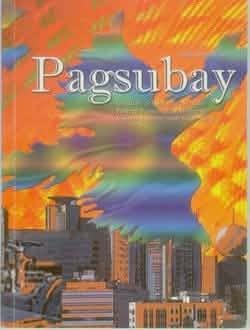
Genotiva's essay appears in Pagsubay, the multidisciplinary journal and official publication of the Graduate School at Eastern Visayas State University (EVSU) in Tacloban City. The journal features academic research, cultural studies, and national and regional literature, with a special focus on the heritage, language, and arts of Eastern Visayas. It was famously edited by Genotiva, a prominent essayist, poet, and literary critic known for his leadership in reviving Waray literature. Because of his central role in the local creative writing and cultural community, Pagsubay remains a respected resource for scholars of Eastern Visayan literature.