Review of Louis Wain – Mental Health Reflected in Art
By: Michael A. Arnold

It seems the Covid lock-downs made us more aware of, and sensitive to, mental health issues – and how art and expression helps with them. During the pandemic lot of people filled their sudden wealth of free time with self-improvement or creative interests: they learnt a new language, or the guitar, or photography. People needed to do something just to fend off the stress of boredom and cabin fever.
Now that the lockdowns are over it seems like a lot of those hobbies have been left behind. It is a shame, there is a liberation in creating art that cannot really be found in anything else. Art is, as has been said in this column before, an expression of the artist: a communication. And like the Outsider Art, or the work of Beksinski we have looked at previously, not all of those communications are pleasant or easy to understand - or see the beauty of.
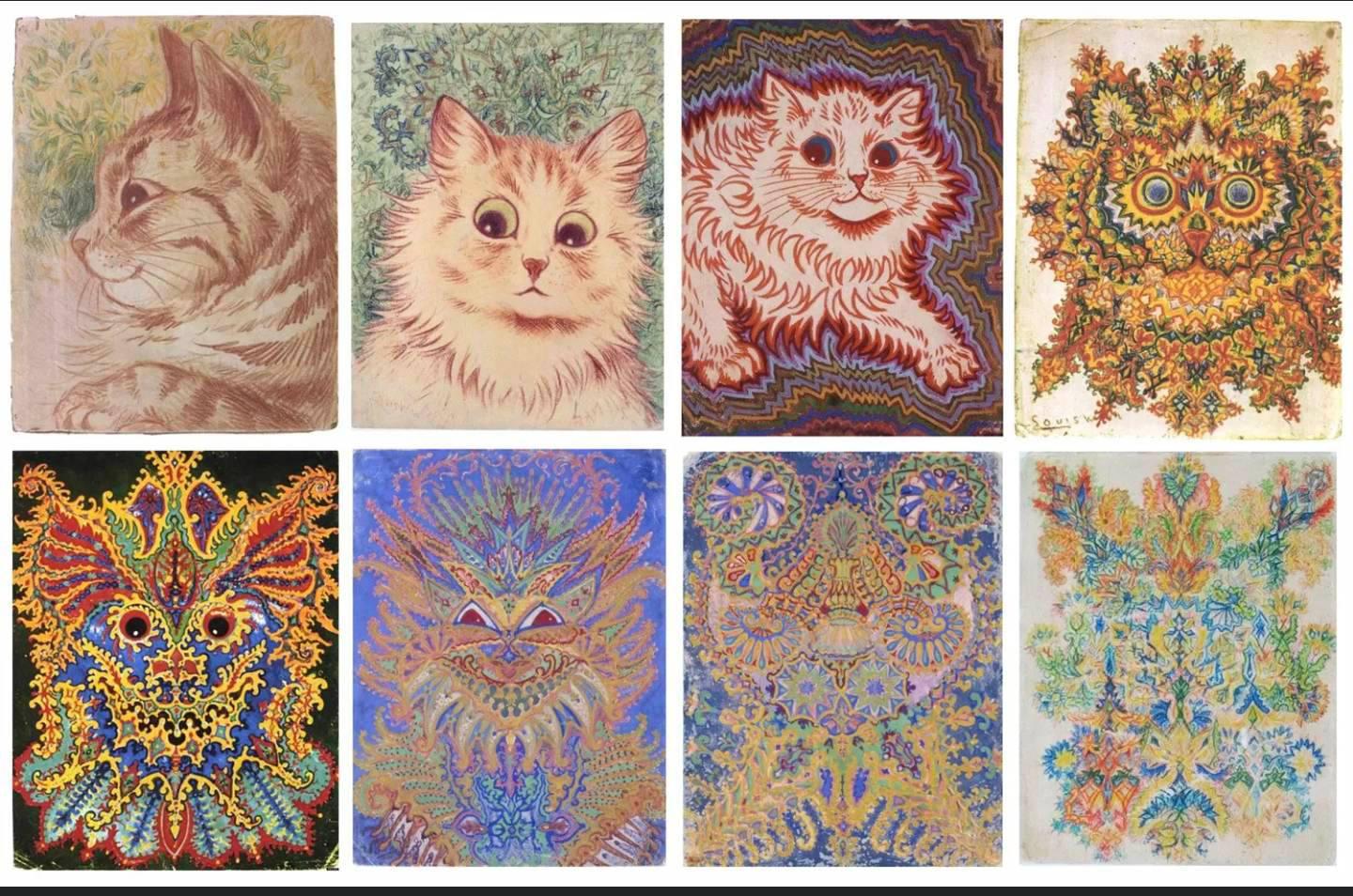
Mental illness is rarely pretty, despite how often it is glamorized. But it is also a horrible irony, sometimes that suffering can inspire very interesting work. Louis Wain (1860 – 1939) is one artist where you can see the deterioration of the creator's mind as their work becomes more surreal and abstract.
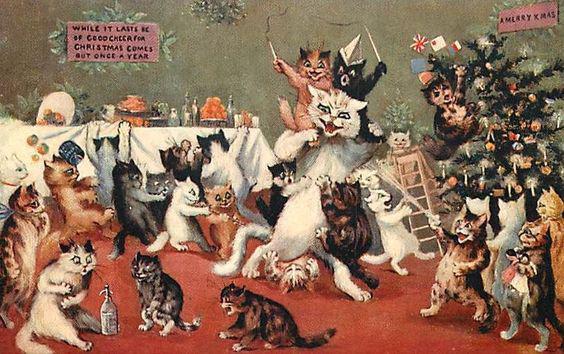
Studying at the West London School of Art, his career started fairly typically, with animal and landscape paintings. The work was never bad, but it was not amazingly successful. He worked as a freelance artist painting and drawing for various magazines, mostly country scenes and depictions of estates and mansions, but he never found the thing that made him stand out in the art world. Things changed when his wife became ill with breast cancer, and he started painting pictures of their cat in cute and fun scenes to cheer her up. She encouraged him to try and publish these works, and he was soon finding regular work painting images of cats for The Illustrated London News, the world's first weekly newspaper, following their acceptance of his ‘A Kitten's Christmas Party' and its surprising popularity.
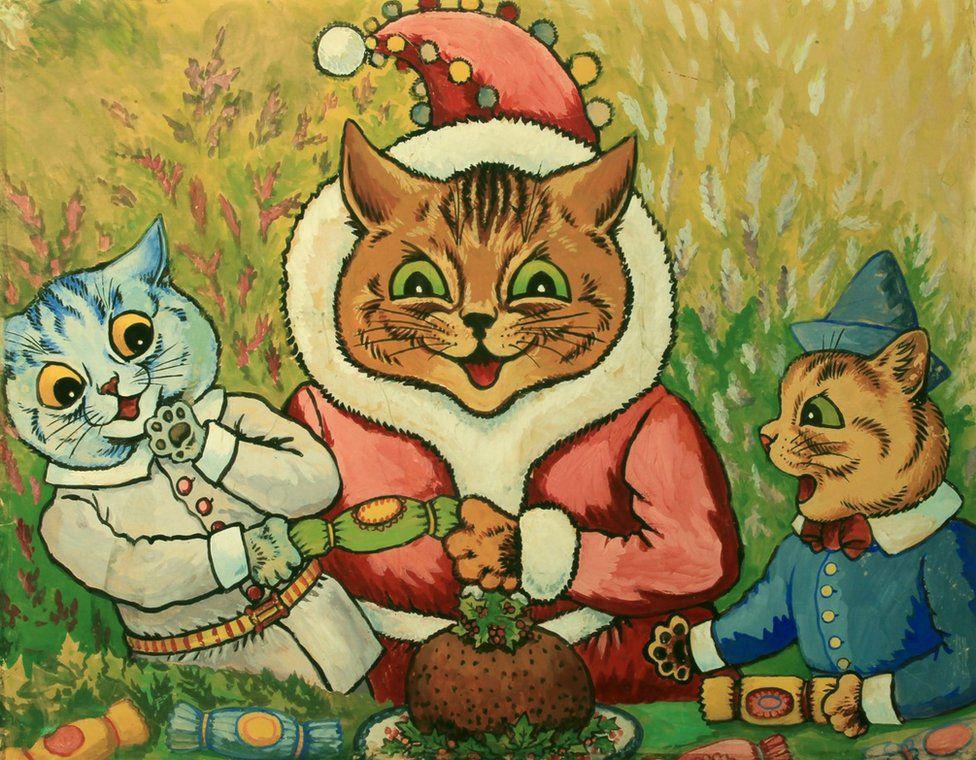
Within a short frame of time Louis Wain had become a popular artist and celebrity. Following this success, Wain would paint cats pretty much exclusively. He was soon getting a number of commissions for illustrating children's books, and his cat paintings became so popular, and mass produced that it seemed like everyone had something by Louis Wain on the wall of their kids' rooms. It helped that his work was not drably serious, his cats could be found having fun or being silly as we can see here:
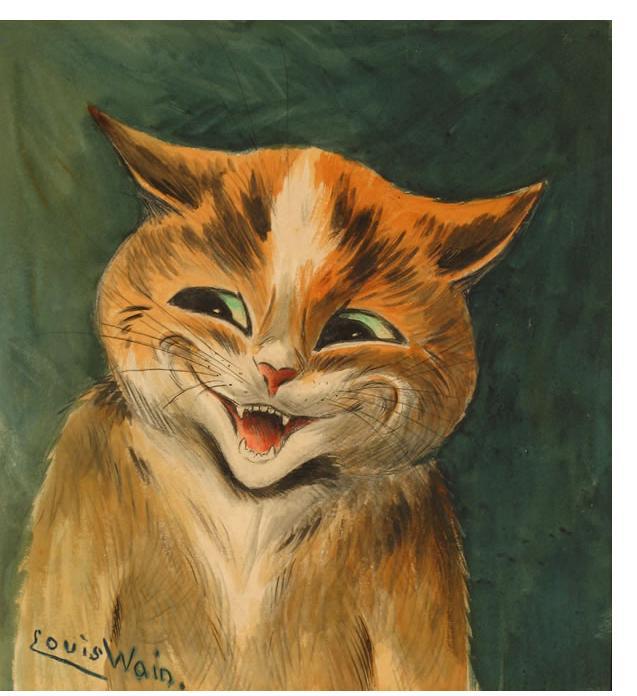
Sadly, his wife died after a few years of battling cancer, and while she had seen some of the success he was enjoying, this was when Louis' mental health started to decline. His paintings became more somber, and he personally started to show signs of anxiety and depression. This was reflected in his output, such as this picture – in contrast to the paintings above, this one feels unsettled:
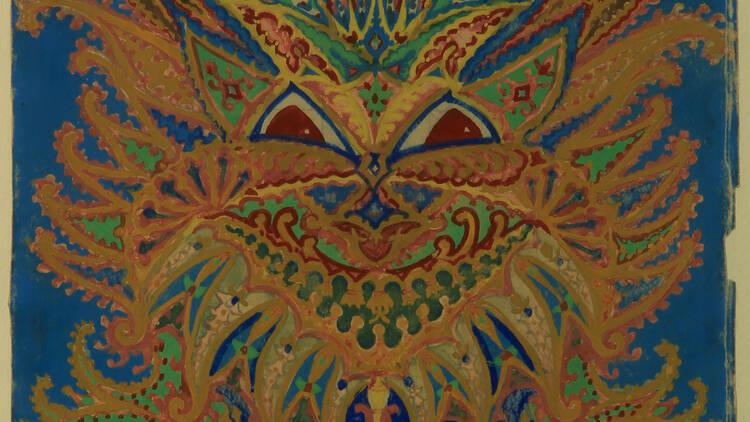
He also became increasingly careless with money, selling paintings outright and so never receiving royalties for them afterward. The inevitable eventually happened, he ran out of money, and his mental health declined even more – until he was put in a mental institution. While inside the institution, he continued to paint until his death and was still painting cats, but by then, his work was increasingly abstract, even disturbing:
At the head of this article, you can also see the progressive abstraction of his style and art in inverse relation to his mental health.
It is difficult to say exactly what his mental illness was, and it is wrong to say it was simply depression. He has been diagnosed retrospectively with schizophrenia, which has often blamed for his increasingly surreal and disturbing output. But whatever his illness, and he certainly had one, it in no way diminished his talent. His late work is vibrant, the lines are reflective of the skill and confidence of a master. We do not need to blame his later weirdness on his illness - it might be enough to simply acknowledge that his work became stranger, and he also became more ill.
It is easy to place Louis' earlier work in context, they were products of the dominant fashions and tastes of the late Victorian and early Edwardian eras. It is much more difficult to place his later work in any context, especially if we forget that by this time the surreal and the Avant Garde was much more established and accepted. His relationship with the Modernist movement, which started to rise in prominence around the 1900s until the 1930s, is difficult to find. The strangeness and abstraction of artists like Pablo Picasso and the Cubists, or the unrestrained wildness of the Dada movement are not quite the same thing as this. Yet a lot of Wain's later work has a strangely Arabesque quality that makes it feel somehow contemporary. It looks like something you would see on the cover of a heavy metal album or something.
Whatever the inspiration behind this radical later style, it is an expression of the artist's mind and an attempt to communicate. It is strangely beautiful and unique. It has an emotional power that is as difficult to describe as it would be for the artist to explain in words. Words can seem so hollow when trying to describe intense emotions, images and color can capture it better. That is what makes Louis Wain's art what it is.