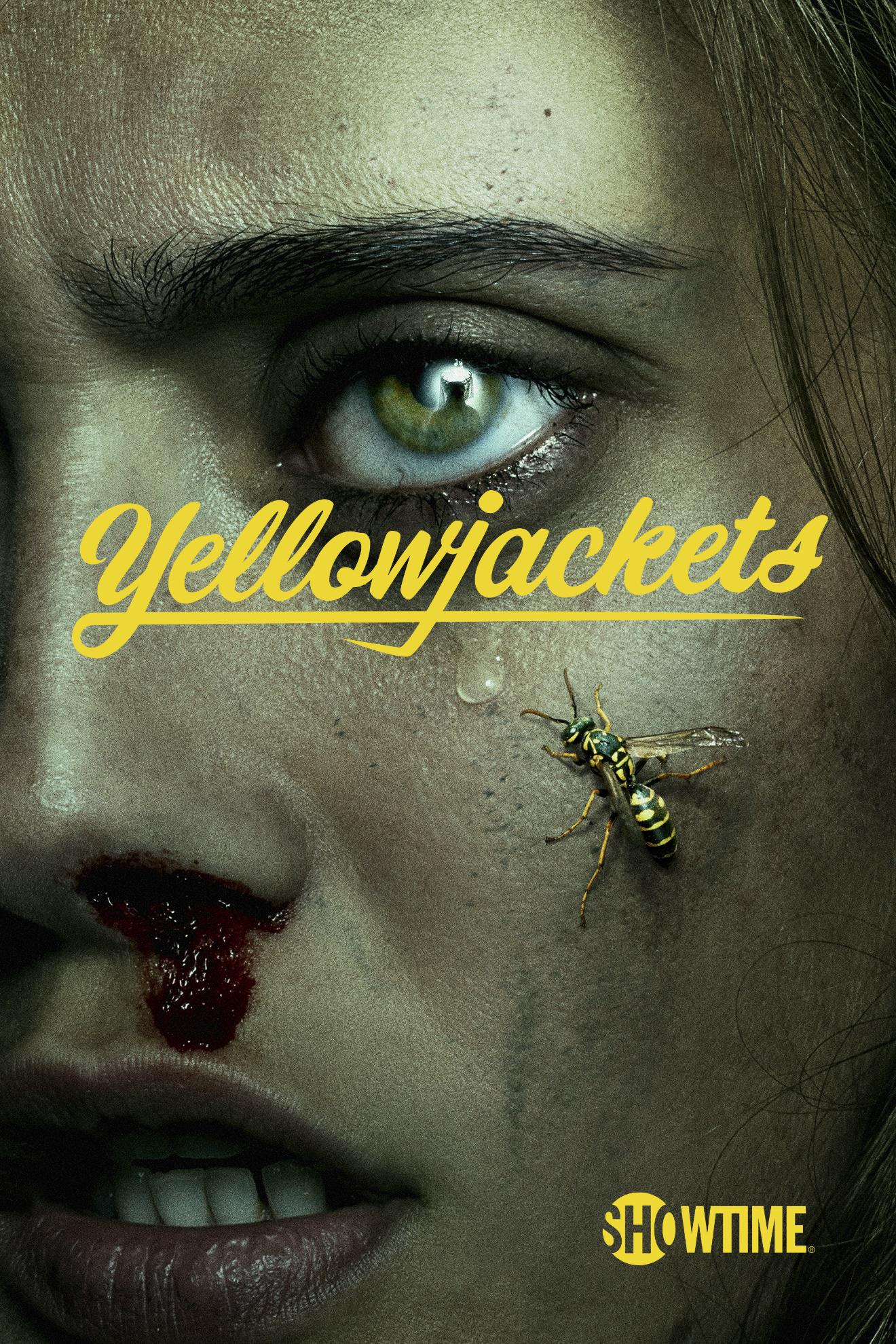
Review of Yellowjackets
By: Jenna Sparks

Psychological horror has never really required the room to grow and evolve. These are the tales that prey upon their audiences' fears, especially of the time, that also tend to have deeper sociological themes. Think of American Psycho and the male ego, where the narrative became an entirely different when it was made into a film from a woman's perspective. In recent years, studio A24 has become synonymous with their psychological horror thrillers, including Midsommar, Hereditary, and The VVitch, all modern cult classics. But another beacon of intricately woven storytelling has emerged in Showtime's Yellowjackets, and it's not worth missing.
When it comes to shows like Yellowjackets, I tend to stay away until it has aired in completion because I know myself; there's no way I'm going to be able to go a week between episodes. The trailer looked promising, with a Lord of the Flies mystique and allusions to cannibalism. So, when I was finally able to settle down and watch the full series, I found myself in awe and amazement and absolute bewilderment.
The series stars hard hitters like Melanie Lynskey (But I'm a Cheerleader, the Perks of Being a Wallflower, Don't Look Up, Castle Rock) as Shauna, Christina Ricci (Prozac Nation, Sleepy Hollow, The Addams Family) as Misty, Juliette Lewis (Cape Fear, Natural Born Killers, From Dusk till Dawn, Whip It) as Natalie, and Tawny Cypress (Heroes, House of Cards) as Taissa in their adult lives.
Yellowjackets is a ten-episode series centered around a group of a high school soccer team on their way to a national tournament after their plane crashes in the wilderness of Canada. We explore two timelines: 1996, after the crash, and the present. In the present, the story follows several survivors as they navigate PTSD and their adult lives.
The modern narrative kicks into gear when present-day Natalie is released from her stint in rehab and returns to New Jersey to confront Misty, revealing she was sent a mysterious postcard featuring a sigil that became synonymous with their time and experience in the wilderness after the crash. Reluctant to have Misty's help, the two team up to seek out Travis, another survivor of the crash, only to discover he had died by suicide, but they proceed to suspect murder. Meanwhile, Shauna is living a monotonous life with her husband, Jeff, who had also been high school sweethearts with Shauna's best friend, Jackie, who ultimately died in the wilderness (this isn't a spoiler, okay?). Additionally, Taissa is a prominent politician seeking election as state senator. After twenty-five years, the group reunites upon the mysterious circumstances of Travis' death, as well as further intriguing texts from a blackmailer.
The show balances the two timelines well, and while we begin at the end with a glimpse of the true horrors of a group of teenagers living in the wild for nineteen months, we gradually uncover more and more about what lead them to that point, and as such, where they are in their adult lives.
What makes the series so terrifying is a combination of the normalcy and the pacing. In the past timeline, though this group of teenagers are forced to figure out how to survive in the wilderness, they are also going through very typical teenage things, including romance, sex, friendships, betrayals, and even mental health. One of the most entertaining episodes had to be the feature of menstruation in the wild, a subject that never is addressed in TV or film, let alone stories centered around the inaccessibility to modern conveniences and hygiene. I also can't help but applaud the tiny detail of the teenagers' body hair. It may seem like such a trivial detail, but in most shows and films that depict women clean shaven, even in apocalyptic worlds where their primary concern is apparently hairlessness and survival, it's a refreshing take.
Beyond the tales of coming-of-age woes, the show also navigates a fine line of fantasy and reality. While Laura Lee, one of the survivors in the 1996 timeline, is a devout Christian, young Lottie is having a hard time understanding the meaning of the crash and circumstances, and in her vulnerability, seeks guidance from Laura Lee. At the beginning of the series, we learn of Lottie's dependence and need for an unnamed medication. Later, it's proposed that Lottie is susceptible to premonitions, and in the wild, she is the first to succumb to the more fantastical elements surrounding the group. Is it psychosis or mania, or is it tangible?
The transitions aren't always seamless, and it works to confuse the audience as most psychological thrillers do. The moment we feel comfortable in understanding what's real, we're hit with a new tide of certainty and our perception easily shifts by the minute.
By the end of the season, we are left with fewer questions answered and even more ambiguity, and we really must trust the writers knew they were going to be greenlit for a second season.
Another factor makes the series even more engaging is the atmosphere. With the presence of popular music from the '90's, the show's composers seem to have been able to master the juxtaposition of the two worlds throughout the show: that of nature and that of teenage angst. With a score by Craig Wedren (of the band Shudder to Think) and Anna Waronker (of the 90's band That Dog), who previously worked together on Hulu's Shrill, they seemed a perfect collaborative inclusion of the series. They beautifully blended the effects of 90's grunge and pop-punk with ethereal, ancient melodies, and their work is the backbone to the narrative, constantly weaving and intertwining the stories with ease, lending to the audience's absolute understanding of the twisting, confusing stories.
While at times the show can seem over complicated, it doesn't always feel as though the journey wasn't worthwhile. There is a payoff if you respect the intricate reality of life and trauma. The show's first season finale, without spoilers, is where the show finally seems to find it's appropriate footing and establishment, allowing us to see the much larger scale and bigger picture of the overall concept, while maintaining plenty of questions and loose ends. If the show had not been renewed, the ending would easily be considered compelling enough and even appropriate with the mystery the stories are shrouded in, but incomplete. Within the first episode, we get a glimpse of what's to come, but by the end of the season, we've seen none of it come to fruition; a bold stance had the series not been renewed.
As it stands, Yellowjackets season two is happening, and I'm eager to see what's to come, and in my opinion, while it's worth watching knowing there's a second part on its way, you may be better off waiting until the next bout of episodes are released, as it's easy to get discouraged by the premise with no real resolution.
As of now, I'd give the series a solid 3 out of 5 Season 1 of Yellowjackets is available on Showtime.