Review of Dexter: New Blood Review and Playing Dexter's Advocate
By: Jenna Sparks

WARNING: This review contains MAJOR spoilers for Dexter, Dexter: New Blood, The Last of Us, and The Last of Us 2
In 2006, audiences saw fictional serial killer, Dexter Morgan, leap from the pages of Jeff Lindsay's novel Darkly Dreaming Dexter and onto screens in Showtime's Dexter.
The show follows Dexter, a blood spatter analyst for the Miami Metro Police Department, alongside his adoptive sister, Deb, and their peers as well as romantic interests, and various antagonists, all set to the backdrop of the bloody and bright Miami area. Dexter's secret is that he's a serial killer; from a young age, after having been found in a pool of his mother's blood and witnessing her gruesome murder, Dexter goes on to express remorseless violent acts. His adoptive father, Harry, a homicide detective, teachers Dexter a valuable code; the first rule of which is simply: don't get caught. This code aligns with Harry's career as a homicide detective; not only has he witnessed the worst of the worst get away with murder, but he understands the ins-and-outs of, essentially, the perfect crimes. So, he teaches Dexter to utilize his murderous urges against "bad" people (most of Dexter's victims are required to meet this code and that includes 100% certainty and proof that they are, in fact, guilty of vicious and violent crimes like murder, child abuse, or rape). When Dexter reaches adulthood and Harry is long dead and gone, it's up to Dexter to persevere as both a serial killer with a guided moral standard and to appear as brutally normal and average as possible.
To even get into the eight-season series and explain it all in a matter of a few sentences is treacherous and a major disservice to the series in and of itself. In short: Dexter faces "antagonists" each season of varying degrees. He marries the delightfully and beautiful average Rita, has a son, Harrison. In season two, Dexter is nearly found out, the remains of his victims found in his ritualistic dumping grounds of the ocean; he manages to pin it all on Sergeant James Doakes from the Miami Metro Homicide Department, and a fellow who has always had his eye on Dexter, suspicious of him from the start. Doakes becomes known as the Bay Harbor Butcher, and after a series of events, winds up blown to bits in a cabin in the Everglades. Posthumously, Doakes' legacy as the now famous serial killer allows Dexter to continue his hobby without any more suspicion, save for one Maria LaGuerta, Dexter and Doakes' superior as well as an old friend of Doakes. She never quite believes it was Doakes who was the Bay Harbor Butcher, and her theories carry toward the end of the series.
After Dexter's wife Rita is slain at the hand of the Trinity Killer (click there for a fun refresher and nice tie-in with New Blood) in season four (the best season, and one that for a lot of fans is revered as the TRUE finale), and baby Harrison is found in Rita's blood after witnessing her murder (similarly to Dexter's history with his own mother; routinely, this is referred to having been "born in blood"), the show evolves. We meet Hannah, another serial killer and botanist and on-again-off-again romantic interest for Dexter. Toward the end of the series, Deb knows Dexter's the real Bay Harbor Butcher and is at odds with her own moral compass; she also has admitted that's she's in love with him (a story arc literally no one wanted). LaGuerta is completely embroiled in her theories that Dexter is the serial killer who framed Doakes, and after Dexter establishes that he must kill her for self-preservation and a few other reasons, it's Deb who winds up finding Dexter in the middle of the kill and winds up shooting and killing LaGuerta. Ultimately, at the end of the show, Dexter has plans to escape to Argentina with Harrison and Hannah when Deb is shot and winds up in a vegetative state. He turns off her life support and proceeds to take her body to his oceanic dumping ground as the impending Hurricane Laura approaches. Dexter drives his boat toward the hurricane, sure that his son, Harrison, is safe with Hannah on their way to Argentina.
We are led to believe that Dexter has died, but alas, at the very end, we discover Dexter had survived the hurricane and found footing as a logger in rural Oregon, biding his time and hoping his Dark Passenger is at rest.
The series' end is revered as one of the worst endings to a show of all time; just doing a simple search conjures lists where the finale makes it into all of them. It disappointed fans on the same level of Game of Thrones, and a lot of them don't regard this season's ending as canonical.
When word arose that the show would be making a comeback ten years later under the title Dexter: New Blood, audiences finally had hope that mistakes could be fixed and there would be closure to the fictitious, troubling life and misleading death of Dexter Morgan. Everything seemed to be going along just fine with each episode chugging along with solid ratings. But then the finale happened, and its airing resulted in a major case of déjà vu. With a startling 4.4 out of 10 rating on IMdB, and a handful of angry fans across my feeds, I delved in (having waited because I wanted to binge it at once).
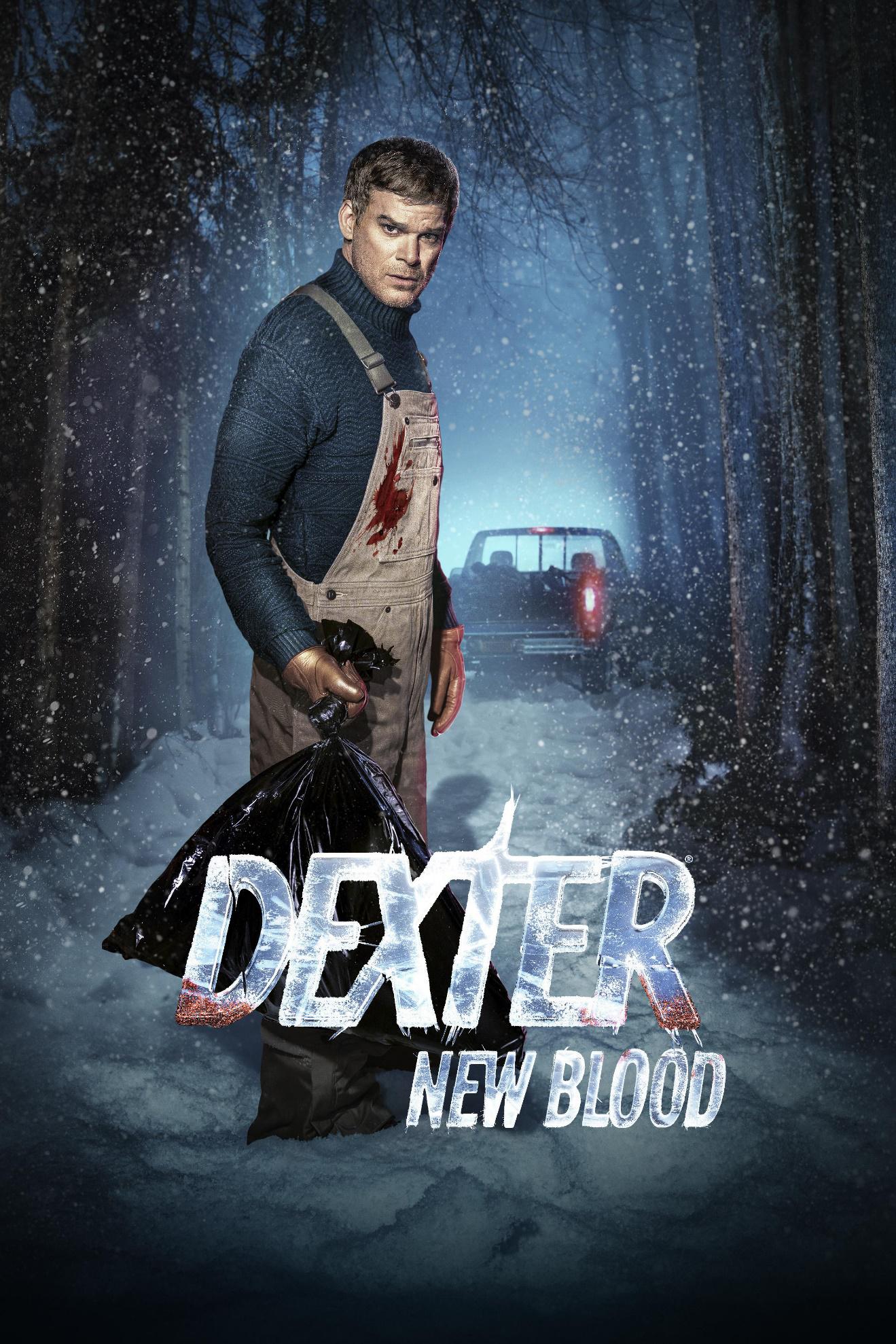
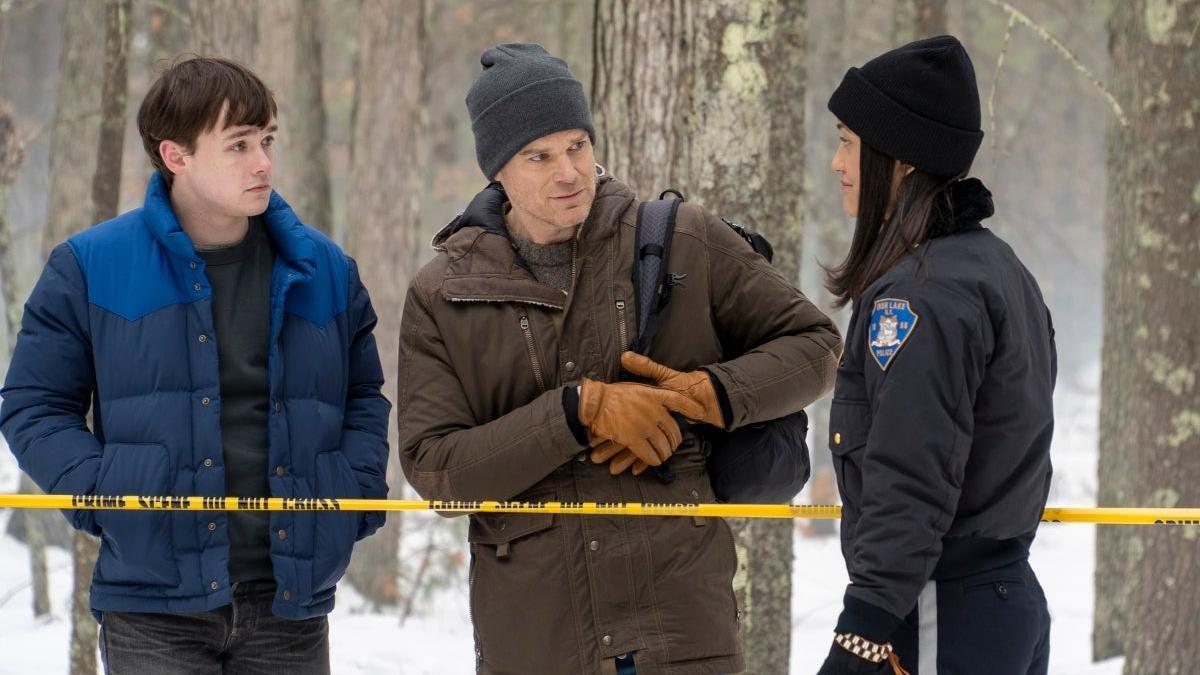
Picking up a decade after the events of the original series, Dexter has moved on from Oregon and now lives in the small, idyllic town of Iron Lake, New York as Jim Lindsay. Things are operating smoothly for him there; he's popular and average, dating the Chief of Police, Angela (whose main goal is searching for and finding missing women from the area who have otherwise been forgotten), and working in a hunting and outdoor shop. It isn't until Dexter comes across local rich-kid, Matt Caldwell, Dexter's Dark Passenger rears its brutal head. Having killed a protected white buck on Seneca land, Matt Caldwell finds himself upon Dexter's table (also after Matt had been the cause of five people's deaths in a boating accident). Simultaneously, someone new arrives in town: Dexter's now teenage son, Harrison. These events kick off the series, exploring the dynamic of Dexter and his son, who has, expectedly, major abandonment issues as well as faces his own inner turmoil and taste for violence.
With a solid plot that is both entertaining and eerie, how could things have gone so wrong come the finale?
So first let's explore Harrison, played by Jack Alcott. He's a typical temperamental teenager who's experienced tremendous loss. It's discovered that Hannah had died three years previously of cancer. Since then, he's been spread across the foster care system and had to learn how to properly care and fend for himself. To top it all off, he has plenty of unresolved trauma with little-to-no answers that might help him better understand the larger scope of why his father had abandoned him or why his mother was brutally murdered. He's troubled, clearly, and the precedent is set when he seeks to enact on that urge with a schoolmate (or a few, really). Armed with a razor blade identical to the one the Trinity Killer used to kill his mother in front of him, Harrison seeks to quiet his own Dark Passenger.
It hadn't always been like this; Harrison previously thought Dexter Morgan to be dead. It was only when he found a letter from Dexter to Hannah admitting that Harrison would be better in the care of Hannah. In the letter, Dexter mentions that should Harrison express any dark tendencies, to reach out to him. Harrison is, obviously, upset when learning this. By setting out to find his father and better understand both why he left and what he means by these "dark tendencies", Harrison might stand a chance at living a life filled with fewer lies and secrets.
In the meantime, Dexter realizes there's no sense in turning his son away; after initially pretending not to know who Dexter Morgan is, he changes his mind and takes Harrison in and does his best to put forward the normalcy he's had to the opportunity to explore for the past decade into practice. This is all happening under the watchful eye of girlfriend, Angela (Julia Jones), Matt's prominent father, Kurt (Clancy Brown), and true crime podcaster, Molly Park (Jamie Chung) who has entered town to further investigate Matt's disappearance for her podcast.
In time, Dexter's truest fears come to fruition when he realizes Harrison is exhibiting signs of those dark tendencies. At first, he pursues therapy, but when that doesn't work and Harrison begins distancing himself (and spending more time with Kurt Caldwell), his new persona as Jim Lindsay begins dissipating and Dexter Morgan and his Dark Passenger start to take the lead once more.
It's an annoyingly accurate portrayal of a relationship that has been so poisoned with murder and death and destruction. In all reality, no child who had been abandoned by the death of a parent only to find out they were alive and quite well would be precisely good or bad. There are moments of purity where Harrison can find solace in his reconnection with Dexter, while Dexter feels his paternal side engaged time and time again, a balancing act of dad and serial killer. He challenges himself routinely, especially in imagining how he wished Harry had done differently upon learning of Dexter's own dark tendencies in his teens.
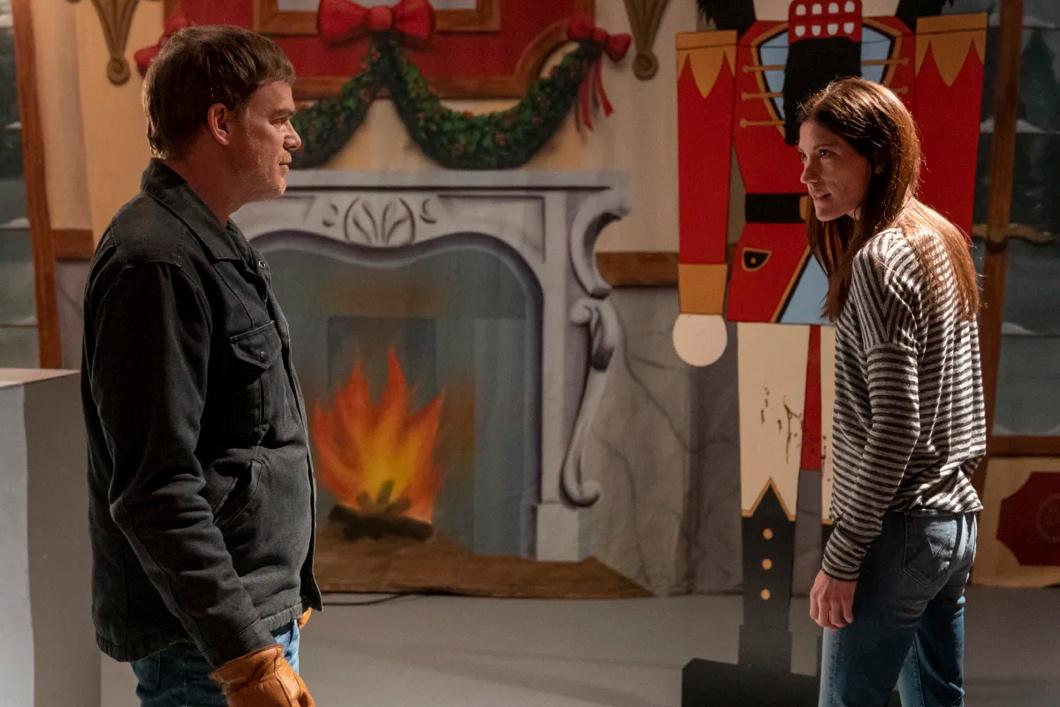
In the original series, Dexter's conscience is led by Harry, a wise man who guides Dexter through the treacheries of his choices and throughout the events of his life during the duration of the series. We see him struggle as he confronts imaginary Harry repeatedly, deeply entangled in messes Harry had left behind, often feeling in his own way abandoned. In New Blood, Harry is replaced by Deb. She now stands in as his conscience in such a perfectly Deb way, it's a magnificent way to see brother and sister reunited. She barks at him and challenges him, always contradicting him but also at times catering to the validation he needs here or there. She imposes the ways that Harry made mistakes in raising someone like Dexter and reminds him that he's constantly making mistakes in taking on this role as a father; that Harrison would be far better off without him.
It's only when Dexter comes to terms with Harrison's own Dark Passenger, we see old patterns emerge. In every season of the original series, Dexter is constantly partnered with an antagonist who he has considered synonymous with his own personhood; he sees himself in some way or another in these other killers and desperately clings to the ideas that he's not alone. That's a constant throughout the series; the problem is that, mostly, each time, at least, that person winds up on Dexter's table. He realizes they are, at the end of the day, far too different. He had nothing in common with the Trinity Killer after all, initially having respected the serial killer for balancing his home and his murder life. It was only after Trinity revealed himself to be abusive and destructive to his family that Dexter couldn't grapple with any more similarities and killed him (only finding out Trinity had killed Rita after).
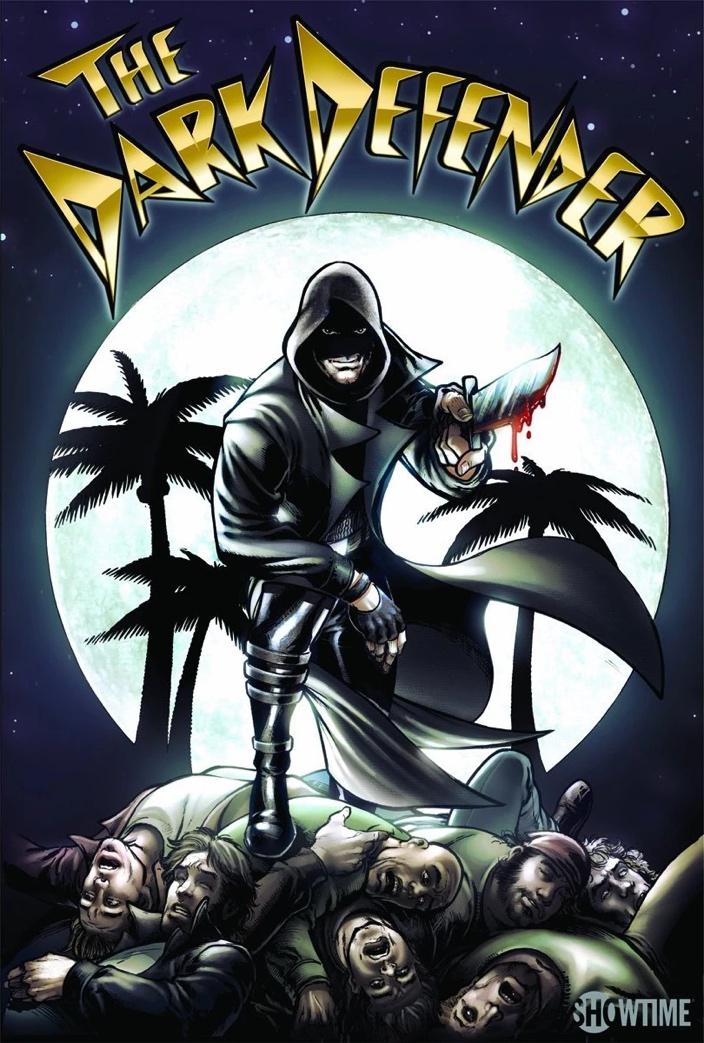
In New Blood, his son fits the pattern of someone Dexter can connect with. He desperately attempts to give Harrison comfort in knowing that he's not alone, that what he's experiencing is just like what Dexter experienced as a child; their urges to hurt and slay are a shared trait. And Harrison is appreciative of this. He feels closer to his father, realizing Dexter is like a vigilante, someone who's operating for the greater good; a storyline we see similarly utilized in season three of the original series with Miguel Prado (Jimmy Smits), an ADA who wants to see justice brought to those who have otherwise escaped it. The storyline with Harrison is a great reminder to the fantasies Dexter had when the Bay Harbor Butcher was granted media attention. Some people viewed him as a vigilante, even proclaiming him as the Dark Defender.
Dexter has long had a desire to be seen as anything but a monster, and in fairness, trying to give Harrison that validation is…not a bad choice in parenting style from a serial killer.
Harrison's views become challenged come the finale when he realizes Dexter has killed outside of the code. It's a twist that expands upon something more visceral than any Dark Passenger that I think fans of the series forget: Dexter is a bad person.
While he may try to convince himself or his son that he kills only criminals of the worst kind, he also has acknowledged that he simply wants to kill. The code is a reason to kill, not the excuse for why he kills. Throughout the original series and even today, Dexter's mental state is constantly discussed. Spread across Reddit threads and discussions are fan-based diagnoses. Psychopathy, sociopathy, schizoid personality disorder, and so many more. But no matter what, Dexter simply does not feel remorse for killing (I would also be remiss if I didn't remind viewers and readers alike that it is VERY rare for people with mental illness or personality disorders to exhibit signs of acting out violently like this FICTITIOUS CHARACTER.) The point is, Dexter has long operated outside the borders of his code; he even admits that Doakes does not fit the criteria and that, overall, he's a good person, but because of opportunity, he uses Doakes as a scapegoat (though it's not Dexter who actually kills him). Dexter has even mistakenly killed people. He's accidentally killed people, and he's even taken it upon himself to perform mercy killings. No matter how we try to cut it (heh), Dexter is still just a regular ol' serial killer with a vague set of rules that he doesn't always abide by.
What I found so interesting is that the major difference between Dexter and Harrison is their psychological attachment to their various acts of violence. While they share similarities in having been born in blood, there is a lot more to unpack, but for the sake ease: Harrison just isn't like Dexter.
Harrison is clearly an emotional person; while we're not in his head throughout the series with a narrative from dead Harry or dead Deb, it's obvious Harrison feels things that his father often must fake in order to appear normal. While Harrison may have an attraction to potentially lethal and murderous behavior, he also cries and feels anger and hatred and fear and sadness. When Harrison attacks his schoolmate with the razor, we can theorize why he did it. Was it because he felt the urge to outright kill this person because he had assumed he was a person deserving of death? Or, more likely, was he a good enough target for Harrison to explore the feelings of his mother's killer, who had sliced Rita's femoral artery? It's only after Harrison had listened to a podcast from Molly Park regarding the Trinity Killer and hearing about his mother's cause of death did Harrison, as far as we, the audience, know, strike in a similar method. In this regard, we could assume that Harrison is far more like Trinity than to his own father; Trinity's actions were the effect of his sister's death (falling through a shower and cutting her femoral artery), his mother's suicide, and ultimately killing his father. This is an emotional reaction to a long line of brutal murders spanning over decades as uncovered by FBI Agent Lundy in season four of Dexter.
I'm not a psychologist and I'm not going to pretend to know or understand the psychology of Dexter or Harrison, as it is further expanded upon with Dr. Vogel in the original series. But reading through the reviews on the IMdB page of episode ten of New Blood, audiences felt it was a cheapened, predictable experience.
Harrison shoots and ultimately kills Dexter.
Was it predictable? A bit. But why should that make it a bad story? Harrison's killing of his father is a brutal moment that turns the tables in a way that seems truly authentic if you sit on it for more than a few minutes. In the scene, Dexter meets up with Harrison with the hope of the two of them escaping to Los Angeles, having had been practically found out as a serial killer. Harrison realizes Dexter killed someone not because of the code, but for no other reason than to kill; a reviewer even pointed out that all Dexter would have to do is explain this to Harrison (that it was self-defense). But again, what people forget, is that while this is entirely a fictional world, it is inspired by the truest parts of the human psyche. Harrison has no way to affirm his father's behavior other than from his father himself; when Dexter admits to killing people, that he's done it over a hundred times, and that he's well practiced in the field of serial-killing, Harrison's own moral compass is moving at a pace that is very different to Dexter's. It was always Harrison suggesting that Dexter was killing bad people because they deserved it, that he was a vigilante; a teenaged child trying to defend the horrible, atrocious actions of his father to comfort himself and cope with that fact, while simultaneously to feel less a monster himself for his own urges. In this act, it also proved to Harrison that he didn't have to be a monster, either; while he had admitted previously that he fantasized about hurting people, now he has a guide, his own father, telling him he's not a bad person and that his feelings are valid. Imagine that kind of validation in any other regard? What if a parent explained to a child they loved the scent of gardenias, and that child also loved the scent of gardenias? Or that your father was a photographer, and you had an affinity for photography just like him? That's an association with validation, however small or trite, that serves to bolster something we all crave. Harrison's desire to be validated by his own father is deep and intense in ways that challenge how we have viewed Dexter from season one.
I think the series did a beautiful job in reestablishing the essence of Dexter. The joy of the series is that we are constantly siding with a villain, someone who takes pleasure in murder. And we love him for it. But in perspective, we're not supposed to like Dexter. We're not supposed to root for him. Harrison killing his father is as poetic as it gets and it's a phenomenal way to have closed the story. After all, Dexter believes he killed Harry after Harry had seen Dexter kill for the first time and then killed himself soon after. Dexter's belief is that he's as monstrous as can be for that act alone; Harrison kills Dexter because he needs to prove to himself that he's NOT a monster, that he's ridding the world of someone who meets the code.
I get that a lot of fans felt cheated out of some sort of happy ending; but realistically, it was always going to end in a way similar. Will Harrison's path forward be even more treacherous because he killed his father? Or will he have quieted the source of his own Dark Passenger and get the life that Dexter had so desperately sought?
In more reviews, people chimed in that a lot of the storylines felt wrong. For one, the chief of police, Angela, who had been unable to find dozens of missing girls, is the one who finds a tiny piece of evidence used to point her in the direction of Dexter Morgan's potential identity as the Bay Harbor Butcher. It's such a tired argument; the storyline surrounding the missing girls, while investing and interesting, is a whole other beast, and honestly, I don't feel the opinion holds much weight; the girls are eventually found, and there's good reason why Angela had been unable to find them. It's not like Angela hadn't caught on when evidence arose, and dots started being connected halfway into the season. A small reminder that in reality, is it theorized there are as many as possibly 4,000 serial killers who have gone uncaught. In the show, Angela's biggest struggle is garnering financial support for the police department to further track down these girls, an endeavor that has proved near impossible. She's on her own, doing it on her own time with no help until Molly Park arrives and willing to assist.
In addition, another remark regarding the return of Angel Batista. At of the end of the original series, Angel had stuck by Dexter's side. In New Blood, Angel admits to Angela that he later suspected Dexter Morgan was the actual Bay Harbor Butcher and happened to have an entire file dedicated to the death of Maria LaGuerta (his ex-wife…). We are picking up ten years after the series ended. Ten years. That's a LOT of time for these characters to sit and think on things. I think the reality is that without the influence and manipulation of Dexter able to guide people's train of thought or suspicion, Batista was able to further expand on his ex-wife's theories over, again, the course of ten-freaking-years. It's not as though time stopped for every other character at the end of the series and that was that. Both Deb and her brother Dexter disappeared without a trace, and it had been assumed they were dead; that's still a little weird. Not to mention Dexter's child was suddenly gone, too. Batista was pretty good at his job before, and without Dexter there to manipulate evidence and shift eyes to anyone but himself, even though eyes HAD been set upon him many times, means that audiences never had faith in Batista's character or abilities in the first place. We also know nothing about what's happened in Miami since Dexter's "death". The entire reason Angela and Angel meet is because Angel is speaking at a convention for law enforcement; this alone suggests that Angel is making his rounds in talking to plenty of people from all over the country, and potentially the world. In Molly Park's podcast, Merry, F*cking, Kill, she covers the story of the Bay Harbor Butcher and announces that not everyone is convinced of Doakes' guilt; with the number of armchair sleuths of today's world, who's to say Angel didn't decide to get up to his own sleuthing out of curiosity, sadness, or boredom? A homicide detective's version of looking up high school friends on Facebook, if you will.
The series itself is meticulous, most of the time. The cast is stellar, and it was great fun to see the return of Angel (David Zayas), Deb (Jennifer Carpenter), and even a cameo by the Trinity Killer himself (John Lithgow). The actor portraying Harrison was…admittedly annoying, but honestly, not horrible. I think it's a big role and a big ask; we love Dexter because of Michael C. Hall's ability to have portrayed someone so horrific in such a charming way, but he was also portraying an adult with learned and practiced ways. The character of Harrison is at a crossroads, unsure of who he is and his role in this world. I wouldn't expect any other kind of performance and for that, Jack Alcott did a great job.
Regarding the story, there are a few moments that I did feel were poorly fleshed out. The character of the local snowbird billionaire went nowhere and was altogether a little confusing. It felt as though the writers had intentions of expanding his role, but it was just left afloat. And one thing I wish the story had been able to delve a little deeper into regarding the missing girls was the fact that a lot of them were indigenous girls. We touch on it a bit, and I see where the writers didn't feel the need to expand much more on it, but it would have been a little nice for more awareness.
The series, too, also feels grown up. The original series didn't age that well. There are plenty of homophobic, transphobic, ableist, sexist, and racist jokes and subjects dealt throughout that feel very 2006-2013. Dexter: New Blood did do wonderfully in having an inclusive cast and including the local population of indigenous people and very lightly broaching the racism of that reality.
The editing is top notch and a lot of fun; the end credits are a delight to watch because they're always different and I so appreciate the artistry that went into conceptualizing the ideas for each episode. The music is great and had a major upgrade to match with the setting of rural New York as opposed to bright and humidly hot Miami. Rather than saxophones, we get the haunting echoes of the familiar tune from the original score in icy synths and plenty of entertaining songs placed thoughtfully throughout. Additionally, I loved the idea of revisiting Dexter's world now in the day and age of the true crime hungry realm of podcasts. It was entertaining to explore and a smart way for the narrative of the story to remind us of what was driving the present story.
Audiences love to feel validated in their distaste of a story arc, especially when it leads to the death of a beloved character. My favorite one is the Last of Us, a game that is, undoubtedly, one of the most brilliant games out there for its story content. In the second game, the fan-favorite character, Joel, is killed close to the beginning. Fans were outraged and waged war against the voice actress who portrayed the killer, as well as the game's creators. They allowed this character's death to completely detract from the amazing story that was to follow; and again, Joel was a horrible person. We loved him for various reasons, but at the end of game one, he killed dozens and dozens of people who were hoping to save the world from the virus that had instigated the apocalyptic world to save one person. A person we all loved, too, but for so many, they robbed themselves the opportunity to be told a beautiful story that, truly, is one of the most fascinating things I've ever come to view or play. But rather than accept that stories can be told with the major consequences and deaths of characters, outraged fans turned to transphobia and bullied the voice actress off social media. So yay, fans (that's sarcasm and I hope they all have learned not to be horrible, crappy transphobic people.)
The point is, just because something doesn't end the way you wanted doesn't make the story any less well thought-out. There is plenty of greatness to be found in Dexter: New Blood, and at the end of the day, I think if it's given another thought, fans stand a chance at being able to realize how sensical the ending truly was and how poetic and interesting and well painted it was.
Honestly, I give it a 4.5 out of 5 stars and I'm not sorry!